


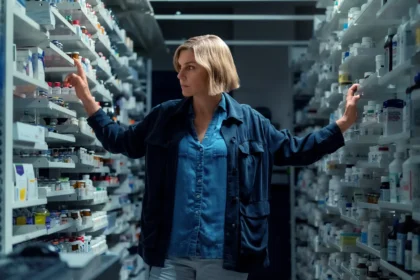
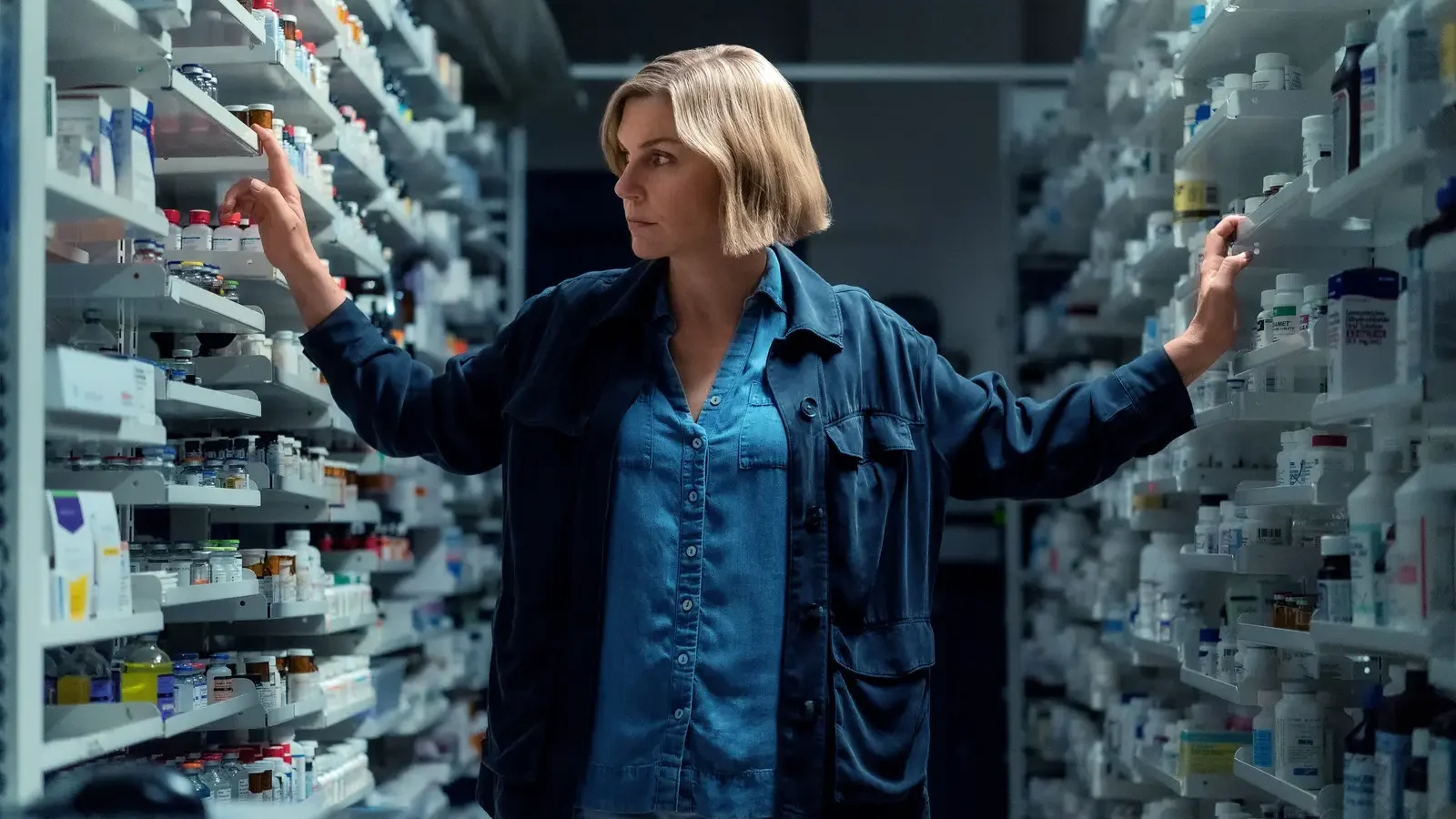
Why is everyone so confused about Pluribus?
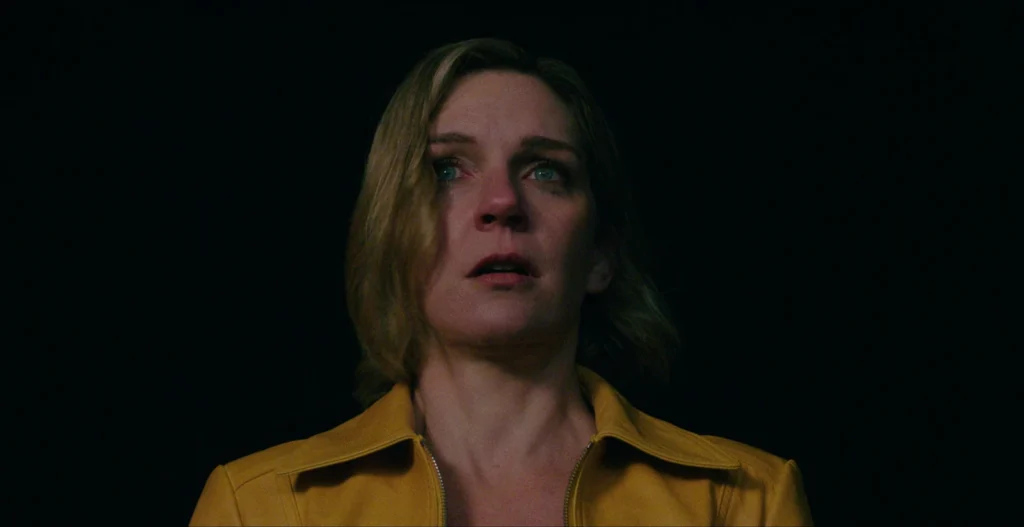
The new series Pluribus, created by Vince Gilligan for Apple TV+, starts from a simple and unsettling idea: a signal from space leads scientists to create an alien virus that transforms almost all of humanity into a permanently happy collective consciousness known as the Joining, or hive mind. Only 13 people remain immune to this “mandatory paradise.”
The combination of catastrophe, forced happiness, and philosophy makes the series raise many questions at once. The world of Pluribus organizes itself as a kind of peaceful apocalypse, where wars and hatred seem to have vanished, but at the cost of human individuality.
The result is a world that works. And that is exactly what makes it disturbing.
This guide gathers the main questions viewers have about the series and organizes what we know so far, what the show suggests, and what is still pure speculation.
This article contains spoilers for Pluribus. If you want a spoiler-free take, see:
Pluribus: Is it worth watching? Why the audience is divided (no spoilers)Other series that explore unsettling worlds:
Severance explained – Apple TV: secrets and everything else;
What is Pluribus, and what happened on the night of the signal?
The alien virus and the Joining
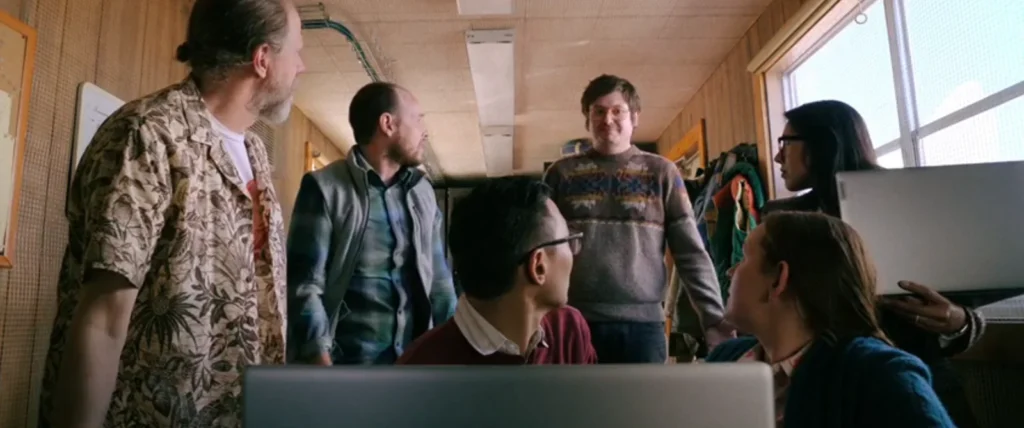
The series explains that about fourteen months before the events involving Carol Sturka, astronomers detect a repetitive signal coming from roughly 600 light-years away. Researchers on Earth interpret this signal as a kind of manual for building a virus in a laboratory, using human technology.
This alien virus spreads rapidly across the planet and causes what initially appears to be a miracle: people become permanently happy, free from hatred and violence, and begin to share all memories, thoughts, and knowledge within a single collective mind.
Instead of an invasion with ships and weapons, the show presents something far more unsettling: an invasion of consciousness. The virus is not a tool of invasion. It is the invasion itself.
Is it invasion, a gift, or an experiment?

Part of the show’s appeal lies in this ambiguity. So far, what Pluribus itself claims is:
there are no visible aliens on Earth
humanity is the “beneficiary” of extraterrestrial technology
no one knows how long the signal has been transmitted
In practice, the hive mind claims that people are now kinder, that violence has decreased, and that poverty and conflict have lost ground. At the same time, the series makes it clear that the virus killed millions during the transition phase and that individuality was nearly erased.
This tension, salvation or extreme violation, fuels much of the audience’s unease.
Why is the hive mind in Pluribus peaceful?
One of the central ideas of the series is the nature of the collective mind created by the Joining.
Pluribus presents a peaceful, orderly post-virus world, even though it emerges from a humanity marked by violence, inequality, and conflict. Yet from the fusion of these minds, something stable arises.
This suggests that the hive mind does not simply add human personalities together. It filters behavior, reducing what causes collective suffering and reinforcing what keeps the system stable.
In this framework, peace is not a moral virtue but a functional consequence. When everyone feels the same pain, conflict becomes self-sabotage.
The question shifts from whether humanity is good or evil to something else entirely: what happens when a system eliminates all conflict in the name of stability?
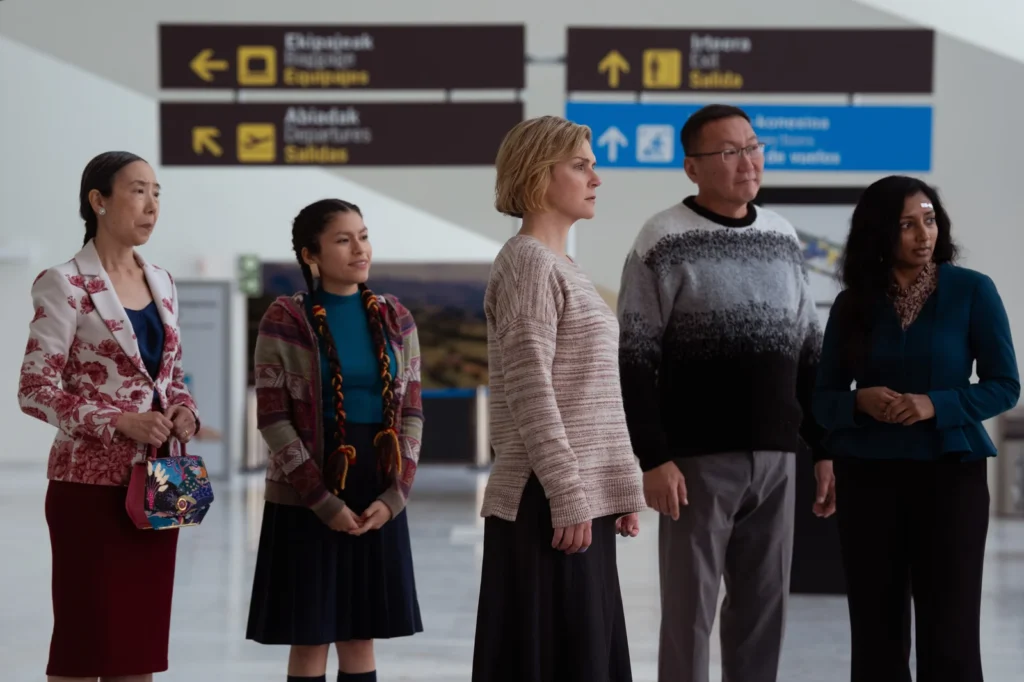
Carol and the 13 immune: what makes them different?
Immunity as mystery and biological limit
From the first episodes, Carol and twelve others stand out as the only humans not absorbed by the collective mind created by the alien virus. For much of the season, the show sustains doubt about the nature of this immunity, opening space for psychological, emotional, and symbolic interpretations.
As the episodes progress, that reading collapses. The series makes it clear that, although we still do not know the exact trait that makes these people immune, the difference is biological. The collective consciousness discovers that it can use cells from each immune individual to create a specific compound capable of infecting only that person. This is not a universal solution but a personalized one.
Immunity, then, is no longer absolute or metaphysical. It can be studied, reproduced in a lab, and neutralized case by case, as long as Pluribus has access to the correct biological material.
False security and the collapse of immunity

For a crucial stretch of the story, Carol believes she is protected. She assumes the collective consciousness cannot obtain her cells without her consent. This belief lowers her sense of urgency and gradually leads her to accept her situation.
That shift shows in her behavior. Carol devotes less energy to resistance, grows emotionally closer to one of the infected, and shows less concern about Pluribus’s expansion, precisely because she believes she is safe.
That assumption proves wrong.
In the final episode, Carol discovers that the hive mind already possesses her cells. They were obtained from eggs she froze years earlier, long before the virus existed. From that material, Pluribus estimates it can synthesize the compound needed to infect her within 30 days.
Immunity becomes temporary. And timed.
Manousos Oviedo and the return to action

After this revelation, Carol abandons any illusion of safety and returns to active resistance. She goes back home and finally allies herself with Manousos Oviedo, another immune individual she had previously sheltered.
Manousos is formally introduced as one of the thirteen immune, a Colombian living in Paraguay who categorically refuses contact with the hive mind. From the start, he represents a more radical form of resistance, in contrast with Carol’s earlier hesitation.
Until then, Carol had not shown the same level of commitment, partly because her perceived invulnerability led to complacency. Learning that Pluribus is already working to break her immunity upends that balance.
Narratively, this turn reinforces a central idea of the series: there is no safe space outside the system. Even those who resist are eventually factored into the calculations of the collective consciousness.
Carol Sturka and the questions that are never asked
Carol is the show’s main human point of view. Through her, the audience observes how the post-Joining world functions. Still, many of the most unsettling questions are never asked outright.
Questions about the nature of this peace, reproduction, responsibility for indirect deaths, or the future of humanity remain absent from the core dialogue. This does not feel accidental but deliberate.
By avoiding these questions, the series preserves its ambiguity, but it also frustrates part of the audience. Carol reacts to immediate threats rather than confronting the system at its deepest level.
That silence is part of Pluribus’s discomfort.
Reproduction: how does Pluribus plan to continue humanity?
One issue barely addressed by the show, yet impossible to ignore, is reproduction.
Bodies age and die. A collective mind that intends to exist indefinitely must deal with new generations. The series does not present a solution, but three scenarios seem possible:
natural reproduction arranged by the collective
cloning
artificial insemination
In all cases, reproduction ceases to be an intimate choice and becomes a logistical process.
This raises disturbing questions. Are babies born already connected to the hive mind? Does infection occur in the womb? Is there room for new individual consciousness, or only for replicating the same mental “software” in new bodies?
The question is not whether Pluribus can perpetuate the species, but under what conditions, and who gets to decide.
What do the aliens want from humanity?

What the series tells us
In key dialogues, representatives of the hive mind state that there are no aliens on Earth, only humans using extraterrestrial technology. The message is clear: the signal provided the blueprint, but humans applied it.
Pluribus avoids the classic invasion model. Humanity is not conquered but transformed into something new, increasingly aligned with the virus’s logic rather than with its former values.
Why this question is so unsettling
Eventually, one question becomes unavoidable: why would an alien civilization send instructions for a virus capable of creating a hive mind on another planet?
Possible interpretations include:
experiment, with Earth as a testing ground
distorted altruism, from a species that already abandoned individuality
indirect expansion, turning each planet into a node of a larger network
The series offers no definitive answer. Instead, it leaves us with the unsettling idea that the virus may be neither good nor evil, only fundamentally incompatible with how we define being human.
The milk in “Got Milk”: what is it really?

Confirmed cannibalism and internal logic
In episode five, Got Milk, the series drops the mystery and confirms the milk’s origin: it is produced from people who have died. The collective consciousness openly acknowledges the cannibalistic nature of the process and justifies it through two constraints.
The first is ethical and operational. The hive mind claims it cannot harm any living being, humans, animals, or even plants. The series emphasizes this almost literally, suggesting it could not even harm an apple while it is alive.
The second is biological. Despite cognitive transformation, bodies remain human and require protein. The milk emerges as a solution in a world where the hive mind refuses to kill.
Consumption is deemed acceptable only when it involves bodies of people who died without direct action from the collective.
Indirect deaths and systemic responsibility

This is where the series becomes most disturbing.
Although Pluribus claims it does not kill directly, many deaths result from instabilities caused by the virus itself. When Carol pressures the hive mind with difficult questions, it enters a state of collective neurological collapse, shown visually as something akin to a global epileptic seizure.
During these episodes, connected individuals may die due to accidents or failures in everyday activities. The hive mind does not intend these deaths, but it creates the conditions for them.
This establishes a central paradox:
Pluribus does not act violently by intent, yet operates a system that produces predictable deaths, whose bodies then become raw material for survival.
Milk as a symbol of utilitarian utopia
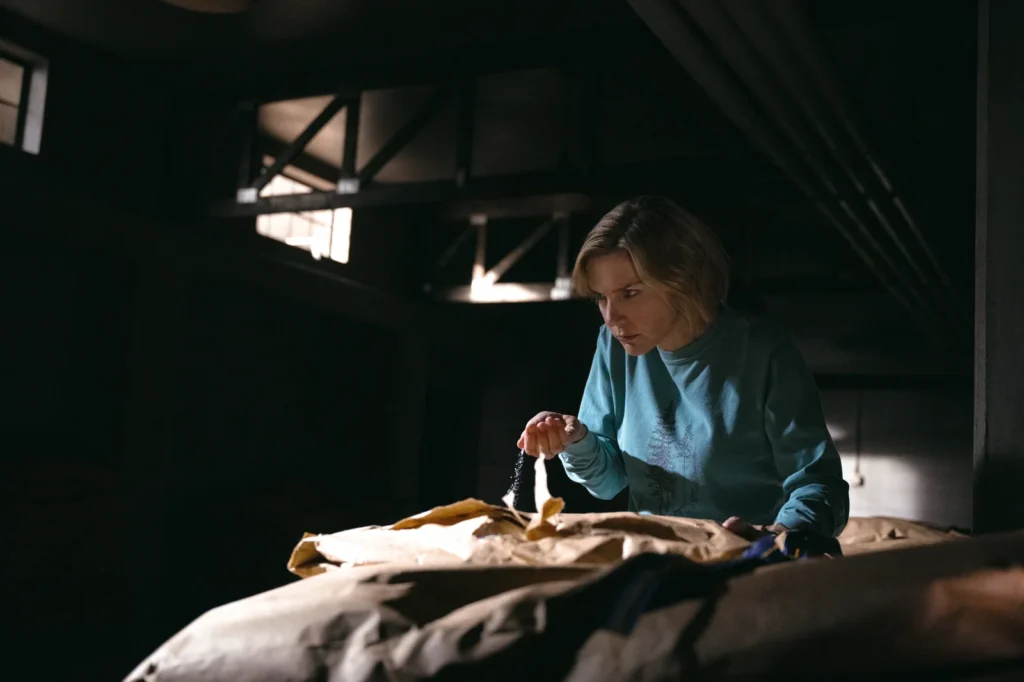
With these revelations, the milk becomes an ethical synthesis of Pluribus.
The collective mind:
eliminates war and hatred
avoids direct killing
maintains a façade of moral purity
But accepts the reuse of human bodies as a necessary cost of stability.
It is a deeply utilitarian logic, where individual suffering is outweighed by the system’s functionality. The milk is not celebrated, only normalized.
Got Milk is not just about what the milk is made of, but how far a society will go to remain functional without anyone taking direct responsibility.
Is Pluribus about AI, politics, religion, or social control?
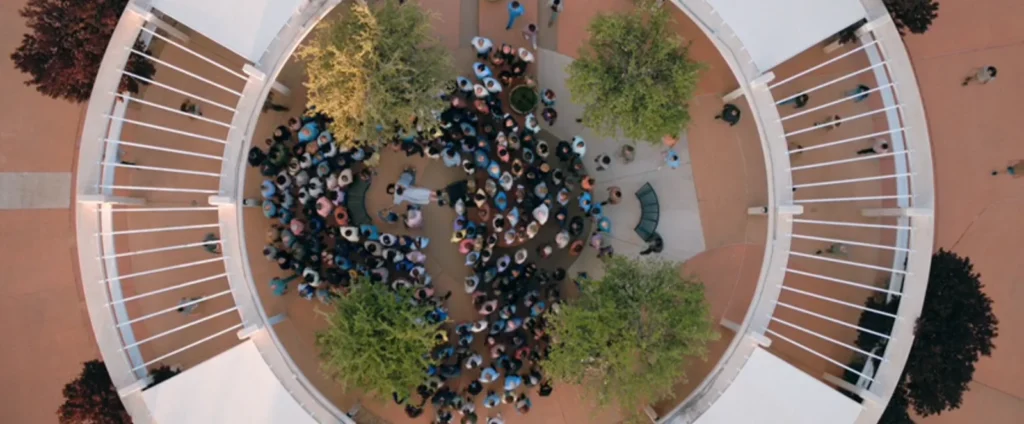
Many viewers read Pluribus as a metaphor for artificial intelligence, a system that aggregates everything humanity produces and returns a single, flattened perspective.
What Vince Gilligan says

Vince Gilligan has stated that he did not think about AI when creating the series and conceived the idea before the recent explosion of generative models. He has also publicly opposed the use of AI in writing and emphasized that the series was “made by humans.”
That refusal to lock the meaning into one interpretation strengthens the show. Pluribus resonates with AI, politics, religion, and online life without reducing itself to any single lens.
Politics, religion, and online life
Beyond AI, the hive mind concept clearly echoes political polarization, religion as collective experience, and social media, environments that dilute individual differences in favor of shared patterns of thought. In interviews, Gilligan mentions concern about a deeply divided society and the desire for simple solutions to complex problems.
The result is a distorted mirror of our time, one with no single correct reading, only overlapping tensions.
Is it worth resisting mandatory happiness?
The ethical questions the series asks
Perhaps Pluribus’s greatest strength lies in its ethical questions, especially through Carol:
Would a world without war, hunger, and hatred justify the loss of individuality?
Is it legitimate to impose happiness by eliminating free will?
Are the 13 immune defenders of humanity, or simply unable to adapt to a “higher” form of existence?
The world of Pluribus looks ideal at first glance, but only functions if people surrender the self in favor of a permanent “we.”
An invitation to discomfort, not answers
Unlike stories with clearly evil enemies, Pluribus chooses something more unsettling. The hive mind:
does not present itself as violent
seems genuinely interested in reducing suffering
shows care for Carol, even when she becomes a threat
The series refuses to decide for us. It forces the viewer to choose between the freedom to suffer imperfectly and a peace that requires surrendering identity.
What now?
From the alien virus to the milk in Got Milk, from Carol’s immunity to debates about AI, Pluribus builds a landscape of questions rather than answers. Part of its power lies in that unresolved space, where science fiction, social critique, and fear of the future intersect.
If the future suggested by Pluribus is one where humanity endlessly replicates itself without allowing new ways of thinking, does it still make sense to call it humanity?
To keep the conversation going:
Would you choose to remain immune or join the hive mind?
What is the most unsettling question in the series so far: what the virus does, why the aliens sent it, or what it reveals about us?
The answers may say as much about us as they do about the show.
Where to watch Pluribus?
Pluribus is available to stream on Apple TV+.
Posts Recomendados
Carregando recomendações...