


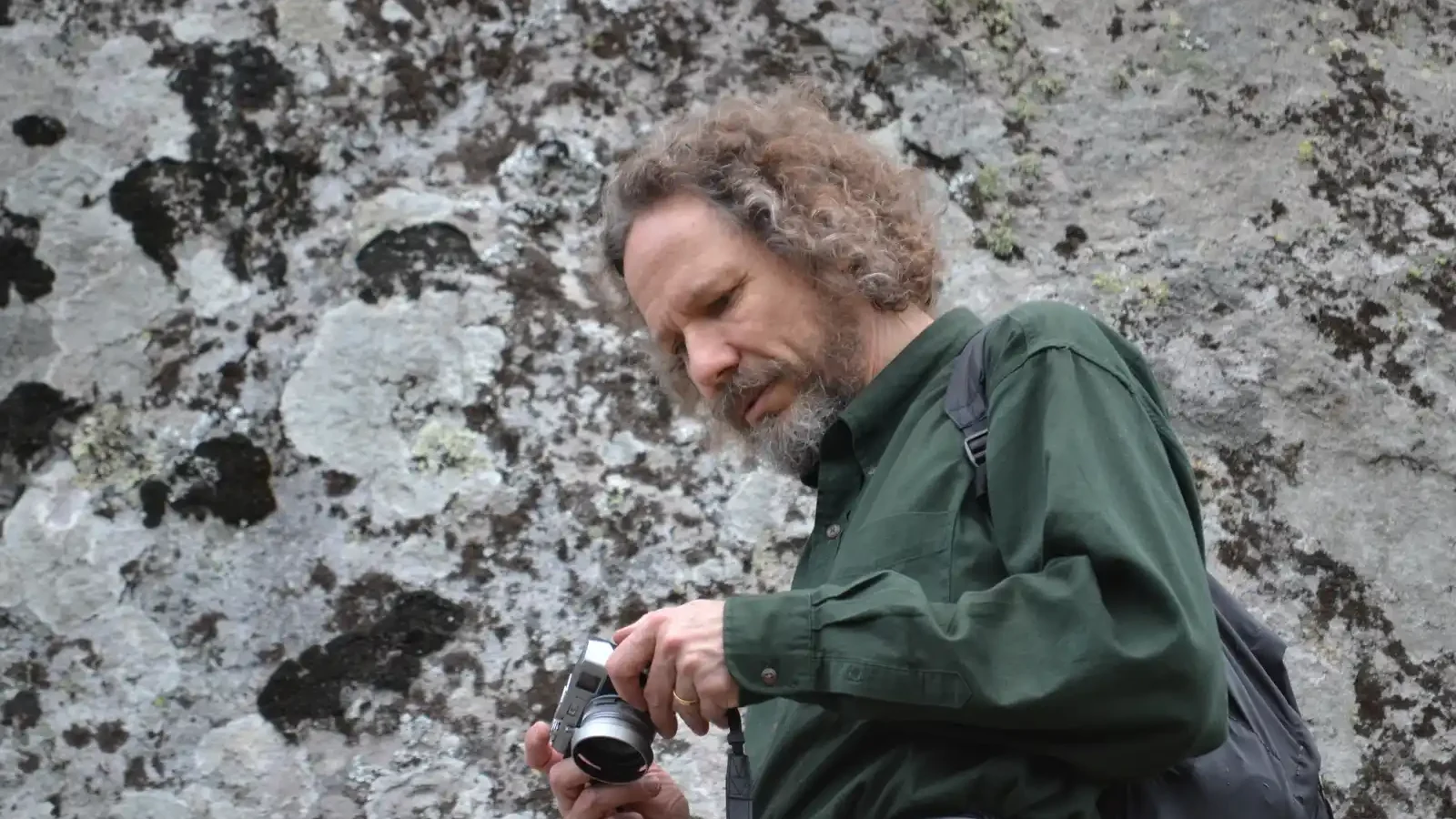
Who Is Robert Schoch? He is an American geologist and professor who gained prominence by proposing a much older origin for the Great Sphinx of Egypt. Holding a Ph.D. in geology and geophysics from Yale University, Schoch has taught at Boston University since the 1980s. Although he has a solid background in natural sciences, he became widely known for advancing the hypothesis that the Sphinx shows signs of water erosion, which would suggest a construction date far earlier than the dynastic Egyptian period. Below, you will learn about his academic background, his controversial theory, and the reaction of the scientific community.
Read also:
- Moving Stones in the Desert: Science Solves a Mystery
- The AI That Predicted the Pandemic Before the WHO
- The Mysterious Bloop Sound: The Noise That Puzzled Scientists for Years
Academic Background and Professional Career

Entrance of the College of General Studies at Boston University, where Robert Schoch serves as an associate professor. The institution is a reference in interdisciplinary higher education in the United States. Image: Boston University – College of General Studies
Robert Schoch earned a dual bachelor’s degree in anthropology and geology from George Washington University in 1979. He later completed his Ph.D. in geology and geophysics at Yale University in 1983. Early in his career, he focused on vertebrate paleontology and published studies on Paleogene mammal fossils throughout the 1980s and 1990s.
From 1984 onward, he began teaching at the College of General Studies at Boston University, where he lectures on geology, environmental science, and geography. In addition, he contributed to academic textbooks and received a rare honor: the fossil genus Robertschochia was named after him. Therefore, long before entering Egyptological controversies, Robert Schoch already had a well-established scientific career.
The Rainfall Erosion Hypothesis and the Sphinx

The Great Sphinx of Giza with the third pyramid in the background. According to Schoch, the erosion of the Sphinx suggests an origin far earlier than dynastic Egypt, challenging the traditional academic chronology. Photo by Hesham Ebaid, public domain (CC0), Wikimedia Commons
Schoch’s most well-known theory emerged in the late 1980s. At that time, he was invited by John Anthony West to examine the Sphinx from a geological perspective. West suspected that the erosion marks were caused by rainfall rather than wind. After visiting the site, Schoch identified vertical and rounded erosion patterns that, moreover, are inconsistent with the arid climate that has dominated Egypt for the past 4,500 years.
Later, in 1991, he conducted seismic analyses and on-site observations. Based on these findings, he concluded that the monument may have been carved between 7,000 and 5,000 BCE, or even earlier. According to this hypothesis, only a prolonged period of heavy rainfall, such as during the African Neolithic, could explain the level of erosion observed in the rock.
Geological Evidence and Technical Arguments
To support this hypothesis, Schoch presented three main pillars.
First, the erosion marks on the Sphinx display vertical and smoothed patterns, unlike the horizontal erosion typically caused by wind.
Second, seismic measurements indicated weathered rock layers reaching depths of up to two meters, suggesting long-term exposure to moisture.
Third, the disproportion between the Sphinx’s body and head suggests that the original sculpture was altered later.
Based on these points, he argued that the Sphinx was carved by a pre-dynastic civilization. The original head, possibly that of a lion, would later have been reshaped into a pharaoh, which could explain its relatively small size. However, archaeologists strongly disputed this interpretation.
Who Is Robert Schoch in Alternative Archaeology?
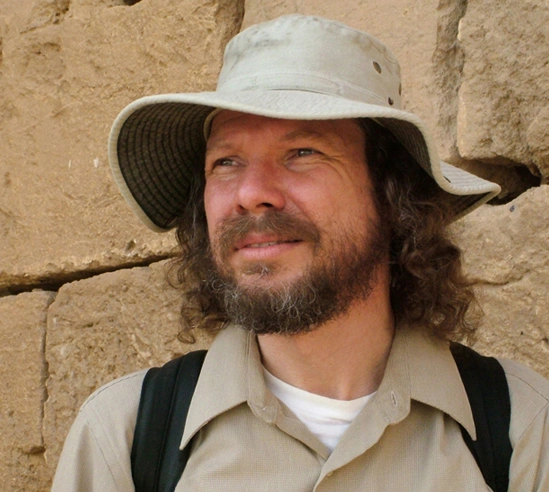
As his theory gained public attention, Robert Schoch began collaborating with prominent figures in alternative archaeology. In 1993, he presented his ideas in the documentary The Mystery of the Sphinx, alongside West. As a result, the documentary reached a global audience and even won an Emmy Award.
Later, he partnered with Robert Bauval, known for the Orion correlation theory, to further explore the Giza Plateau. Together, they published Origins of the Sphinx in 2017, a work that connects geological and astronomical evidence. In the book, the authors place the original construction of the Sphinx around 10,500 BCE, associating it with the constellation Leo and the mythological era of Zep Tepi, the “First Time” in ancient Egyptian tradition.
Other Investigations by Schoch

Aerial view of the archaeological complex of Göbekli Tepe in Turkey, one of the pillars of Schoch’s argument for the existence of advanced civilizations long before what official history suggests. Photo by Rolf Cosar, CC BY-SA 4.0, Wikimedia Commons
Beyond the Sphinx, Schoch investigated several historical mysteries. For instance, when analyzing the submerged Yonaguni structure in Japan, he concluded that it is a natural formation rather than a man-made one. He also showed strong interest in Göbekli Tepe, a site dated to around 9,600 BCE in Turkey, which features monumental architecture predating agriculture.
In his book Forgotten Civilization (2012), Schoch proposed that intense solar activity around 9,700 BCE triggered a global climatic collapse. Consequently, ancient societies may have disappeared, giving rise to flood myths found in Sumerian, Hebrew, and Mayan cultures. Although his ideas are often compared to those of Graham Hancock, Schoch primarily grounds his arguments in geological data.
Academic Criticism and Skepticism
Nevertheless, most Egyptologists rejected Schoch’s hypothesis despite its public appeal. According to critics, multiple lines of evidence link the Sphinx to the reign of Khafre around 2,500 BCE. These include the statue’s facial features, the temple built with blocks extracted from the Sphinx enclosure, and inscriptions from the Fourth Dynasty.
Mark Lehner, one of the leading scholars of the Giza Plateau, argues that there is neither chronological nor architectural room for an earlier civilization at the site. Furthermore, independent geologists have attributed the erosion to natural factors. According to them, the type of limestone, the Sphinx’s position within a depression, and the sand’s ability to retain moisture sufficiently explain the observed weathering, without the need to push the monument’s date back by millennia.
Legacy and Scientific Contribution
Despite the disagreements, Who Is Robert Schoch in the eyes of those fascinated by historical enigmas? For many, he represents a scientist who applied a technical, geological lens to Egyptology. His academic background allowed him to raise hypotheses that, even if not widely accepted, stimulated renewed debate.
Schoch also helped popularize the idea that ancient monuments may conceal deeper histories than previously assumed. Ultimately, his figure occupies a unique space between academic skepticism and alternative imagination. For this reason, he remains remembered as the geologist who challenged established views of the Sphinx and sparked a debate that, even today, remains unresolved.
References
- Robert Schoch – Parapsychology and the Extended Nature of Consciousness
- Boston University – Faculty Profile: Dr. Robert M. Schoch (archived version)
- Robert Schoch – Seismic Analysis of the Sphinx Enclosure (archived version)
- The New York Times – Scholars Dispute Claim That Sphinx Is Much Older (1992)
Posts Recomendados
Carregando recomendações...